People of Clay
folksongs as an antidote for colonial amnesia
Words: Akshay Mahajan
Images: Akshay Mahajan
Image caption: Ten-headed Mask - Basant Rabha leads a musical narration with masked dance (bharigan), portraying silent struggles under the weight of tradition through performance.
2 February, 2026
“The intention of this work is simple: to remind us that we are all people of clay — our identities constantly forming and reforming, never entirely chained to the borders we inherit.”
Akshay Mahajan
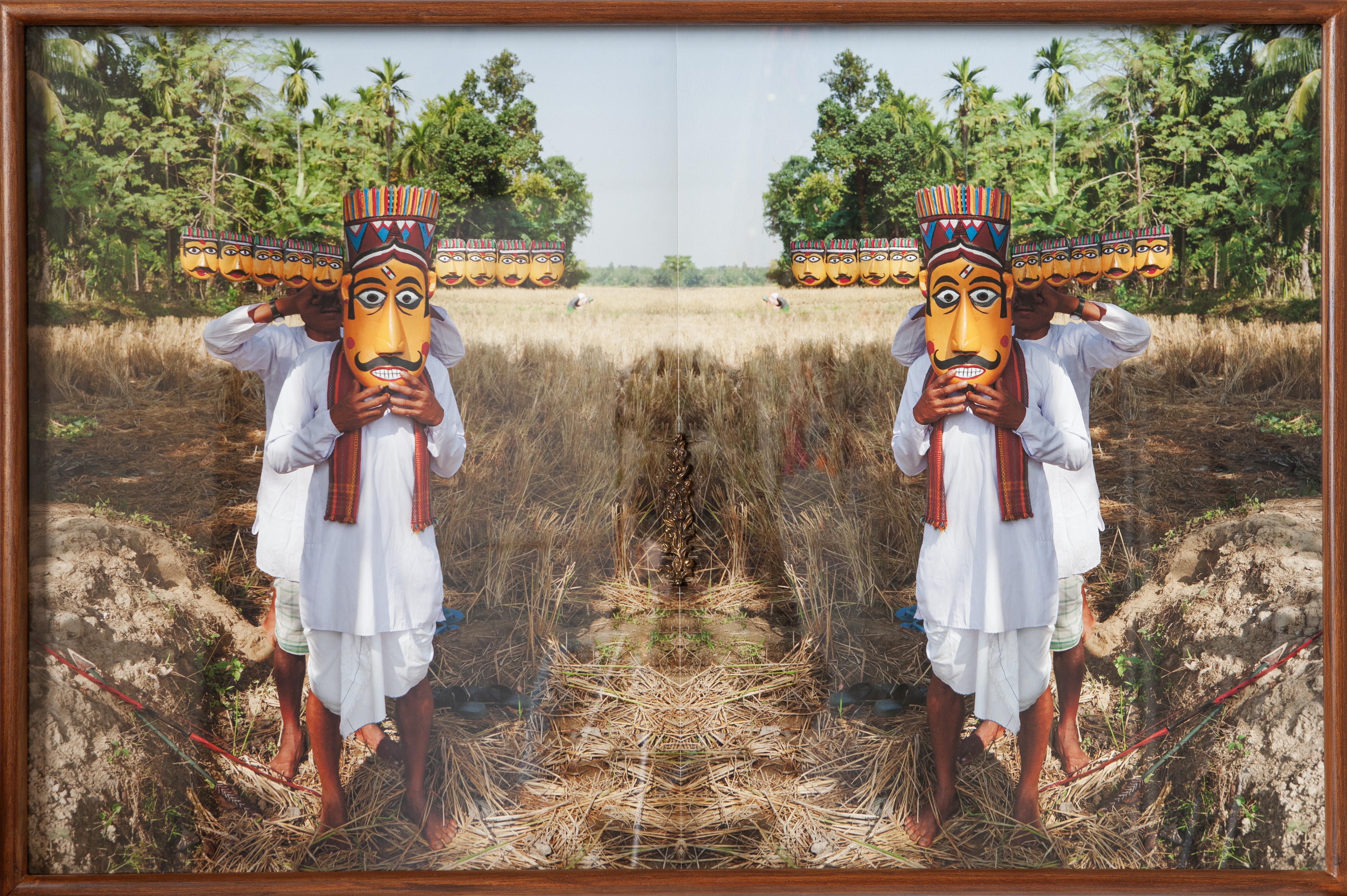
01.
It took me many years to notice that, in the quieter moments, when no one was listening, she would sing. Simple tunes, held together by a haunting melancholy. I would lean in, trying to catch the words of a language I couldn’t yet name. These were Goalparia Lokgeet: local river songs from the Goalpara region, songs that travel person to person like something carried in the mouth.
Using these songs as a kind of map, I began to shape a new, amorphous personal identity - not inherited from birth, but arrived at through love. I travelled to her corner of India, inherited through marriage: a riverine landscape threaded by the Brahmaputra, close to the border with Bangladesh, and caught between the constructed lines of Assam and Bengal. Here, the river is more than scenery. It is a moving archive. It shifts course, deposits silt, erases and returns land; it teaches a different relationship to permanence.
Against this living complexity, the colonial archive often appears blunt and impatient - full of categories that try to fix what is, in fact, porous. The elision of identity becomes stark in documents made to classify. In The People of India, a nineteenth-century British ethnographic album, I encountered a portrait captioned with a chilling certainty: “Rajbansi. Aboriginal. Now Hindoos.” The sentence reads like a stamp, as if a life can be reduced to a before-and-after. It is pejorative, and it is inaccurate: the Rajbanshis were never simply Hindu in the way such a label implies. But that is the point of the caption - not to understand, but to settle the question, to make the subject legible to power.
Using these songs as a kind of map, I began to shape a new, amorphous personal identity - not inherited from birth, but arrived at through love. I travelled to her corner of India, inherited through marriage: a riverine landscape threaded by the Brahmaputra, close to the border with Bangladesh, and caught between the constructed lines of Assam and Bengal. Here, the river is more than scenery. It is a moving archive. It shifts course, deposits silt, erases and returns land; it teaches a different relationship to permanence.
Against this living complexity, the colonial archive often appears blunt and impatient - full of categories that try to fix what is, in fact, porous. The elision of identity becomes stark in documents made to classify. In The People of India, a nineteenth-century British ethnographic album, I encountered a portrait captioned with a chilling certainty: “Rajbansi. Aboriginal. Now Hindoos.” The sentence reads like a stamp, as if a life can be reduced to a before-and-after. It is pejorative, and it is inaccurate: the Rajbanshis were never simply Hindu in the way such a label implies. But that is the point of the caption - not to understand, but to settle the question, to make the subject legible to power.
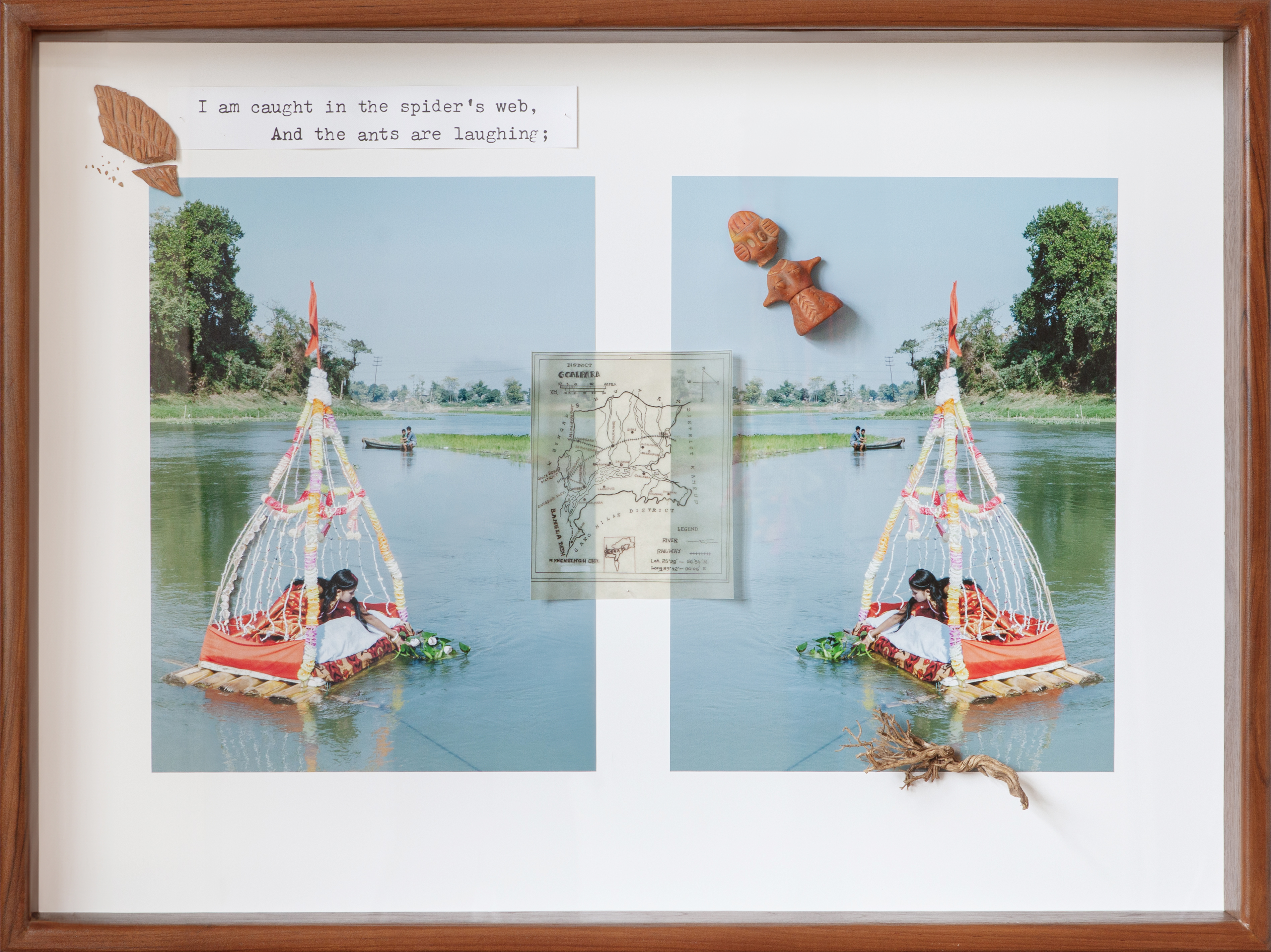
02.
Behula and Lakhamindra
In one legend, a woman named Behula accompanies the corpse of her husband, Lakshmindara, on a raft down the Brahmaputra—popular belief in eastern India holds that a person killed by snakebite should be set afloat on the river. The raft passes several hamlets while the corpse swells and putrefies. Onlookers assume that Behula is mad, but she cannot be dissuaded. “Either I shall die with him or he will come to life and I shall be beside him when he does,” she declares. Behula prays to Manasa—the goddess of snakes—who, the story goes, ensures that the raft survives whirlpools and crocodile attacks. Behula’s perseverance is rewarded when Manasa brings Lakshmindara back to life.
Behula and Lakhamindra
In one legend, a woman named Behula accompanies the corpse of her husband, Lakshmindara, on a raft down the Brahmaputra—popular belief in eastern India holds that a person killed by snakebite should be set afloat on the river. The raft passes several hamlets while the corpse swells and putrefies. Onlookers assume that Behula is mad, but she cannot be dissuaded. “Either I shall die with him or he will come to life and I shall be beside him when he does,” she declares. Behula prays to Manasa—the goddess of snakes—who, the story goes, ensures that the raft survives whirlpools and crocodile attacks. Behula’s perseverance is rewarded when Manasa brings Lakshmindara back to life.
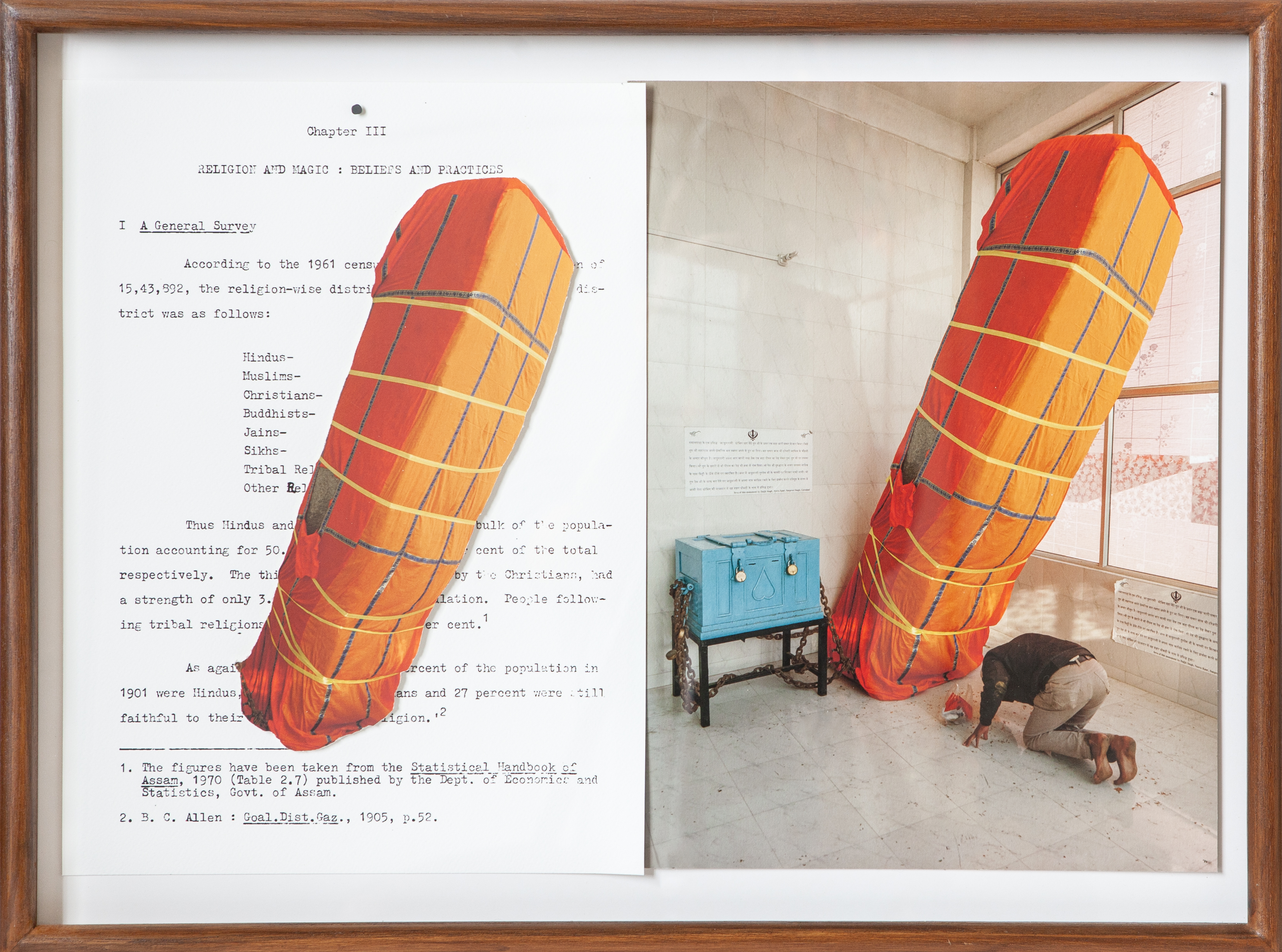
Once a community is folded into a larger regional identity, what gets pushed out first is often what is hardest to translate: folk culture, language, seasonal rites, forms of worship, the small grammar of everyday life. What remains can begin to feel like remnants - held onto inside the boundaries of a border, while slowly threatened by forgetting. The drift towards amnesia is not sudden. It is quiet. It happens as words are replaced, songs are shortened, rituals are performed less frequently, and what was once shared becomes something only a few elders can still carry.
People of Clay begins in this slow unravelling - like a folktale losing detail with each retelling - and tries to pick gently at what persists. I’m interested in a folk psychogeography: how a place is held not only by maps and state lines, but by melody, by memory, by what the body knows. The Goalparia Lokgeet return here not as “background” but as method - a way of remembering that cannot be fully archived on paper. In these songs, breath becomes a record. Syntax survives in rhythm. A people continue to speak, even when the official record has tried to simplify them.
People of Clay begins in this slow unravelling - like a folktale losing detail with each retelling - and tries to pick gently at what persists. I’m interested in a folk psychogeography: how a place is held not only by maps and state lines, but by melody, by memory, by what the body knows. The Goalparia Lokgeet return here not as “background” but as method - a way of remembering that cannot be fully archived on paper. In these songs, breath becomes a record. Syntax survives in rhythm. A people continue to speak, even when the official record has tried to simplify them.
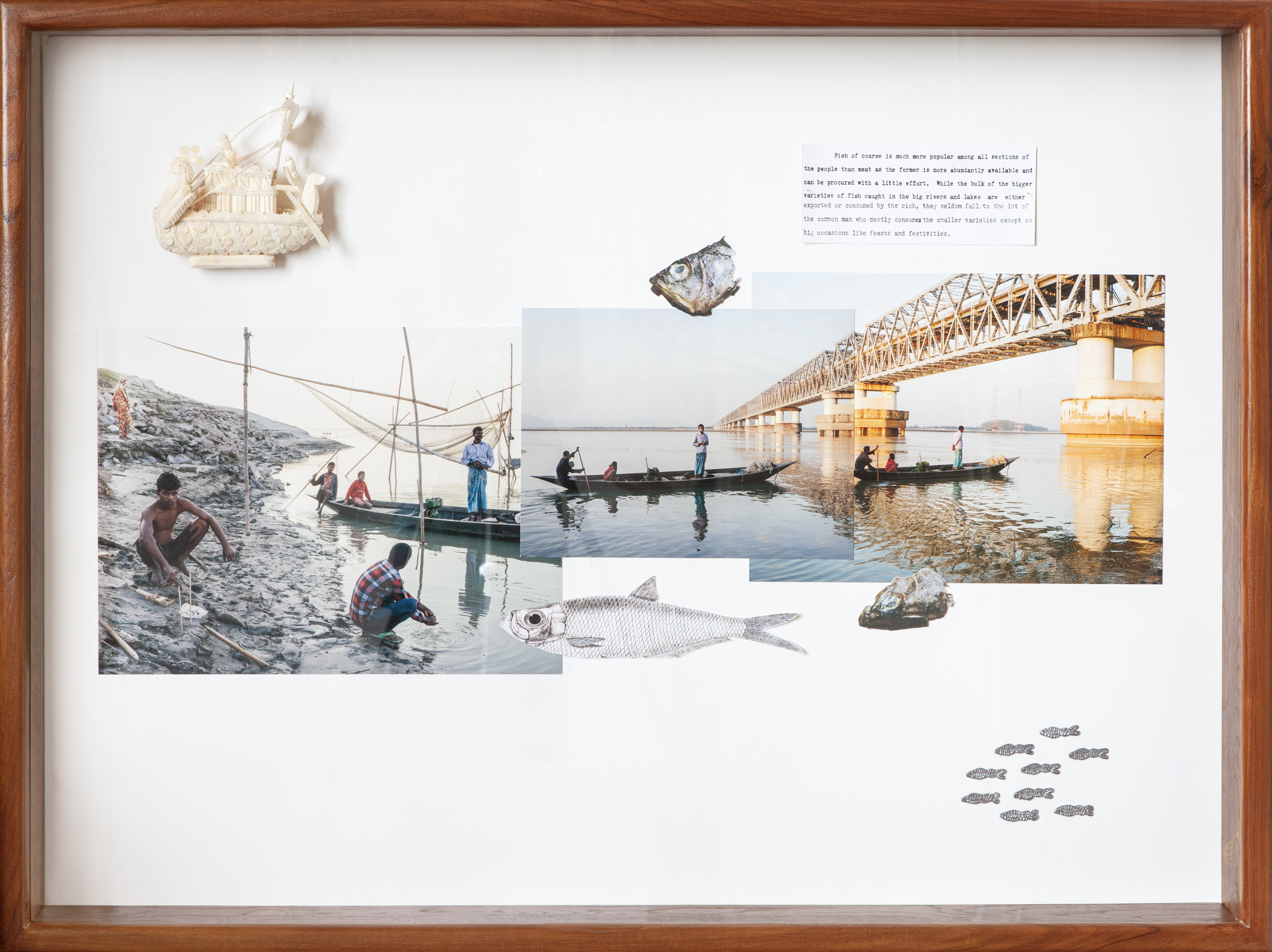
03.
baro mashe tero phul phote
aar bosore phote hola shoi
Najaiyo jomunar jole
Tomra najaiyo najaiyo najaiyo shoihe
oina jomunar jole
Thirteen flowers bloom in twelve months, the water lily annually; avoid the treacherous waters of the Jomuna, never go, never go there.
- Goalparia Lokgeet (Folksong)
baro mashe tero phul phote
aar bosore phote hola shoi
Najaiyo jomunar jole
Tomra najaiyo najaiyo najaiyo shoihe
oina jomunar jole
Thirteen flowers bloom in twelve months, the water lily annually; avoid the treacherous waters of the Jomuna, never go, never go there.
- Goalparia Lokgeet (Folksong)
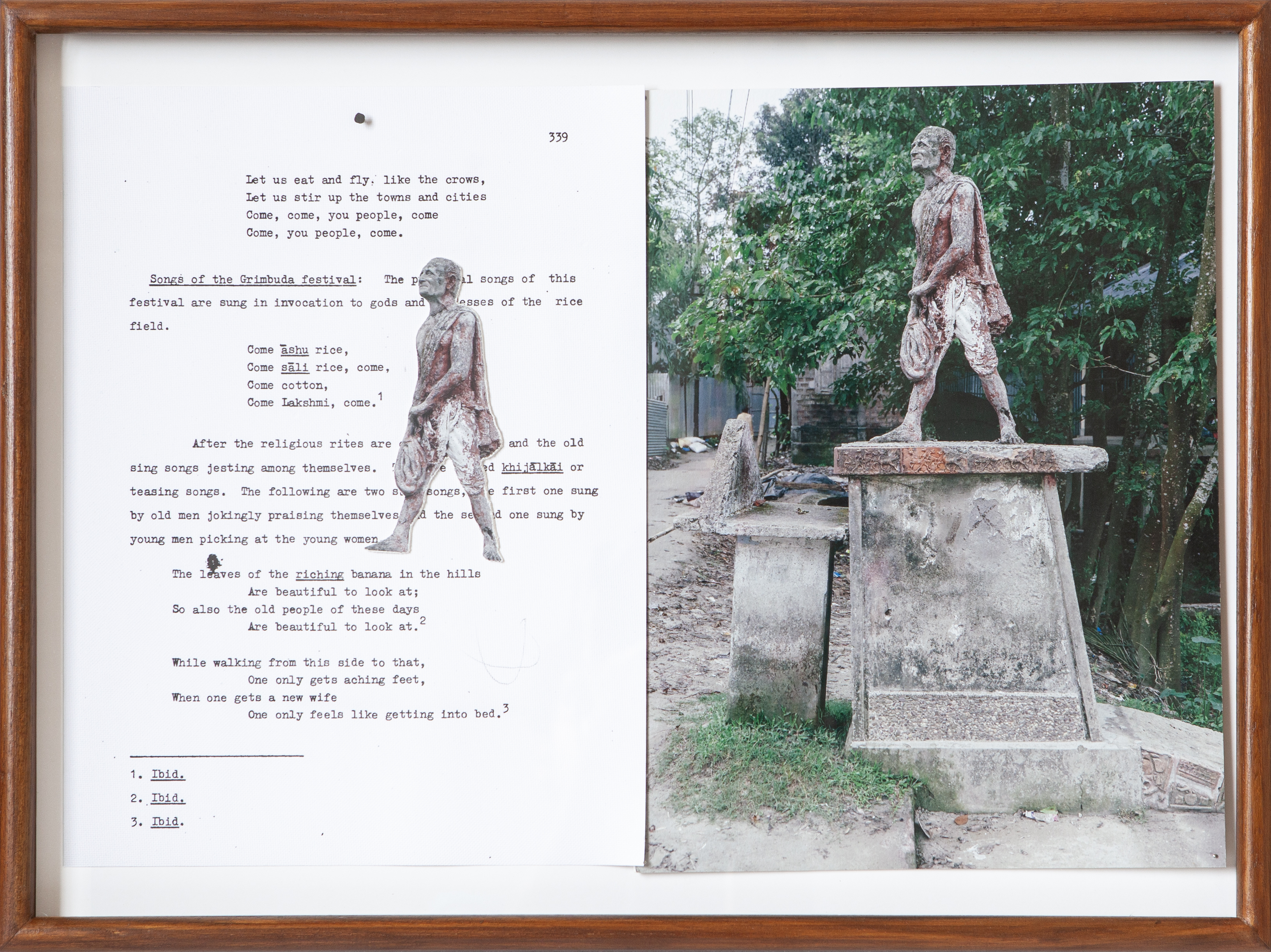
04.
Ek baar hori bolo mon rosona, arey manob dehai goirob koiro na, manob deha maatiro bhando, bhangile hoibe khondo re khondo.
“Once chant the name of the Lord, take no pride in the mortal body; it is but a vessel of clay, and if broken, it becomes shards upon shards.”
Ek baar hori bolo mon rosona, arey manob dehai goirob koiro na, manob deha maatiro bhando, bhangile hoibe khondo re khondo.
“Once chant the name of the Lord, take no pride in the mortal body; it is but a vessel of clay, and if broken, it becomes shards upon shards.”
Clay becomes both material and metaphor. It is taken from the riverbank, shaped by hand, and left open to change. It holds warmth. It takes fingerprints. It cracks, it can be re-wet, reworked. In the same way, identity here does not behave like a sealed label. It behaves like something handled — touched by love, by labour, by history, by displacement, by return.
The intention of this work is simple: to remind us that we are all people of clay — our identities constantly forming and reforming, never entirely chained to the borders we inherit. And, like me, you may find that sometimes identity is not discovered in solitude, but made in relation: through love, through listening, through a song sung softly when no one is paying attention.
The intention of this work is simple: to remind us that we are all people of clay — our identities constantly forming and reforming, never entirely chained to the borders we inherit. And, like me, you may find that sometimes identity is not discovered in solitude, but made in relation: through love, through listening, through a song sung softly when no one is paying attention.

05.
The Pal hand's have shaped the dark clay of the Gadadhar river into little toy figurines (Asharikandi Pottery), since the very inception of this agricultural magic. Unburnt terracotta rich in ancient symbolism.
Hatim dolls, their signature earth calls upon the mother and child. Even the most archaic motifs are subject to change, a man on two wheels stands next to his older counterparts on horses and elephants.
The Pal hand's have shaped the dark clay of the Gadadhar river into little toy figurines (Asharikandi Pottery), since the very inception of this agricultural magic. Unburnt terracotta rich in ancient symbolism.
Hatim dolls, their signature earth calls upon the mother and child. Even the most archaic motifs are subject to change, a man on two wheels stands next to his older counterparts on horses and elephants.
06.
The Stone and magicians

Writer Bio
Akshay Mahajan (b. 1985, India) is an artist whose photography examines postcolonial landscapes, archives, and everyday lives. His research-driven practice explores memory, labour, and ‘failed futures’, tracing how pre-colonial histories continue to shape contemporary realities.